What Is Involved in Church Branding? A Complete Guide for 2025
When many pastors or ministry leaders hear the word branding, they picture logos, color swatches, and graphic design. But in reality, branding goes far deeper than visuals. For a church, branding encompasses the total experience someone has when interacting with your ministry—online, in person, and throughout your community.
Branding is not about becoming trendy or commercial. It’s about clarity.
It’s about communication.
And ultimately, it’s about removing barriers that keep people from connecting with the message of Jesus.
A well-developed church brand helps visitors feel comfortable, helps members feel united, and helps your community understand what your church is called to do.
Below is a complete, expanded look at what goes into branding a church and why it matters more in 2025 than ever before.
What “Branding” Really Means in a Church Context
Branding is simply the way your church expresses its identity—visually, verbally, and experientially.
Your church already has a brand.
The question is whether it’s intentional or accidental.
A strong brand helps people:
Branding is not about image—it’s about communication and alignment.
The Core Elements of Branding a Church
Below are the essential components that make up a clear, effective, ministry-focused brand.
1. Visual Identity: The Part Everyone Thinks About
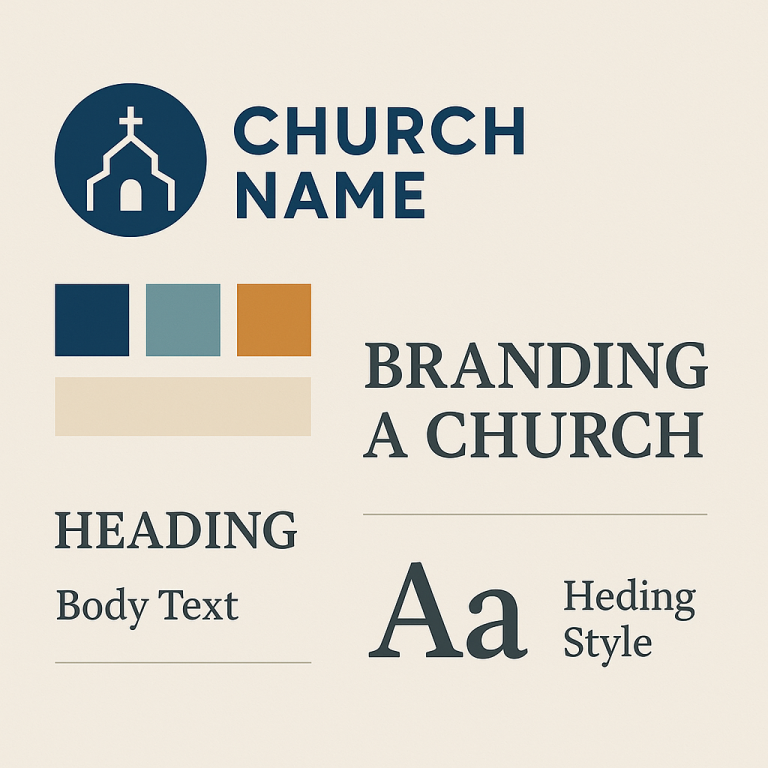
Logo Design
Your logo is the visual handshake of your church. It should be simple, memorable, scalable, and reflective of your mission and culture.
Color Palette
Colors impact emotion and perception. A church’s palette should be harmonious, accessible, and flexible for both digital and print materials.
Typography (Fonts & Text Style)
Typography communicates personality. Clean, modern, readable fonts help everything—from your website to sermon slides—feel clear and unified.
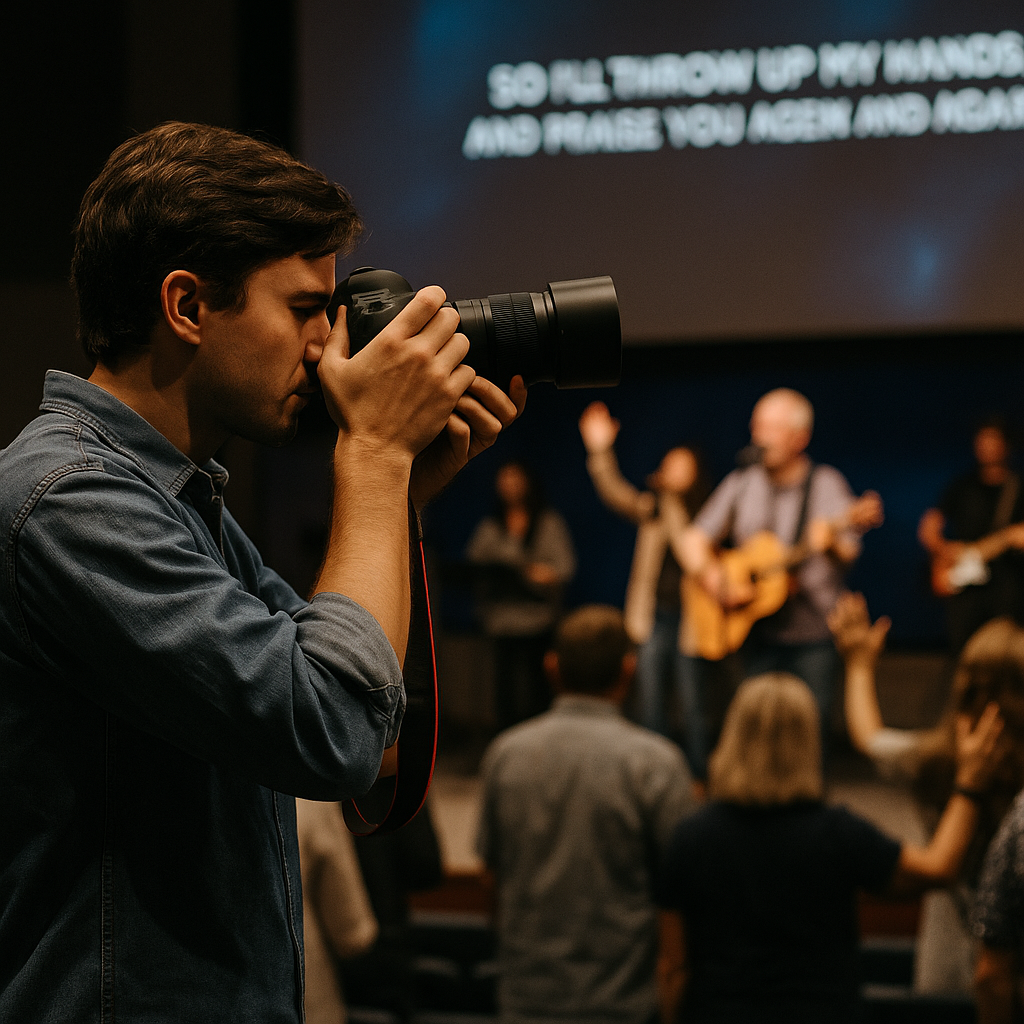
Photography Style
Photography is one of the most powerful tools in church communication. A strong brand includes guidelines for:
lighting
tone
subject matter
editing style
diversity representation
Photography should feel authentic and reflect real ministry moments.
Graphic Elements
This includes icons, textures, patterns, and shapes that unify your design language.
When these visual components work together, your church instantly feels more welcoming and more recognizable.
2. Verbal Identity: The Words That Shape Perception
Your church’s voice matters just as much as its visuals.
Mission Statement & Vision Language
Clear, meaningful wording helps people quickly understand why your church exists and what you value.
Tone of Voice
Is your church:
warm and conversational?
formal and reverent?
modern and energetic?
calm and reflective?
Your tone should be consistent across all sermons, emails, announcements, and social media posts.
Tagline or Church Motto
A short, memorable phrase can help communicate your heart at a glance (e.g., “Real People. Real Hope.”)
Website Copy
Your website is the #1 place people encounter your brand. It must be:
clear
simple
helpful
friendly
visitor-focused
A strong verbal identity makes your church easy to understand and engage with.
3. Cultural Branding: The Part Churches Often Overlook
Branding isn’t just what people see.
It’s what they experience.
This includes:
How you greet people on Sunday
Are guests welcomed intentionally, or left unsure where to go?
How staff and volunteers dress
It doesn’t need to be formal—but it should be consistent with your culture and values.
How the phone is answered
“Yes, this is Faith Community Church, how can we help you today?”
…is very different from…
“Yeah, hello?”
The organization of your lobby or welcome area
Cluttered = confusing.
Clean and intentional = welcoming.
Your children’s check-in process
Safe, simple systems communicate security and care.
Your approach to communication
Consistent messaging prevents confusion and builds unity.
People should experience the same spirit and clarity on Sunday morning that they see in your visuals.
4. Digital Communication: The Online Extension of Your Brand
Your digital presence is just as important as, and sometimes even more important than, your physical one.
Website Design
A branded church website should be:
easy to navigate
fast to load
mobile-friendly
visually unified
updated regularly
Social Media
Platforms like Facebook, Instagram, and YouTube are extensions of your brand. Your posts should appear consistent and convey a unified voice.
Email Communication
A branded email strategy helps your church stay connected throughout the week.
Livestream Branding
Lower-thirds, worship slides, sermon graphics, and video overlays should share the same identity.
Digital touchpoints shape expectations before anyone visits in person.
Why Branding Matters for Your Church’s Mission
A strong brand helps:
✔ Visitors feel confident attending
When your identity is clear, newcomers know what to expect.
✔ Members feel united
Brand consistency builds culture.
✔ Communications become more effective
You no longer reinvent the wheel every week.
✔ Your church look healthy and trustworthy
People are far more likely to join or support ministries that look organized.
✔ Outreach and evangelism become stronger
A clear brand is easier to share.
How Service Ministries Can Help
Service Ministries specializes in providing churches with a comprehensive, ministry-focused brand identity that reflects their heart, culture, and calling. Our services include:
We don’t create trendy brands—we create timeless, ministry-effective ones.